Cricket is more than runs and wickets because the real game is played in the mind, teamwork, leadership decisions, pressure moments, and unseen efforts that never appear on the scoreboard. Mental strength, team chemistry, momentum, and discipline often decide matches more than statistics.
Introduction:
Cricket is a game which cannot be perceived by numbers, statistics or scorecards. The information on the scoreboard about runs, wickets, overs, strike rates, and economy rates is the tip of the iceberg. The real beauty of cricket is always in things that never reach the scorecard like the decisions under pressure, struggle of mind and emotional highs and lows, and the unspoken agreement of the team members that may make you win the match.
Each ball that is tossed does not just shift the score, but also the thoughts in the mind of a player. A single over can increase confidence and a single error can lead to a total downfall. This is the reason why cricket is not merely a sport. It is psychological, emotional and intellectual experience.
This paper discusses the unseen side of cricket that is never portrayed at the scoreboard. These are mental toughness, pressure, leadership, decision making, team chemistry, unseen fielding, momentum and the life lessons taught by cricket. It is not just a tale about cricket only, but a tale about life too since cricket is life. It is the one that is uncontrollable, emotional, sometimes unjust, but beautiful.
The Psychological Strategy of Every Shot:

A bat or a ball is not the strongest weapon in a game of cricket. It is the mind. The most renowned cricketers in the world tend to comment that cricket is predominantly a mind game. When a batsman is at the crease, he is facing not only the bowler but also facing the other end. He is also under pressure of the crowd, previous failures, future expectations and self doubt.
Virat Kohli is an ideal representative of such mindset. His style is outstanding, and his greatest asset is his attitude. Many players will be defensive when pressure rises. Kohli is made more focused and violent. He does not perceive pressure as a stressor but he utilizes it as a source of energy. This is the reason his performances are better at major games.
Visualization and mental rehearsal are applied by the top level players. As the match is not yet on, they envision such different scenarios such as pressure on the powerplay, death overs, adverse conditions and quick bowling spells. This will lessen panic on the actual game. But when we begin thinking negatively, then we lack self-confidence, we lose rhythm and we do not perform well.
Mental control is the greatest disparity between champions and average players. Champions manage their emotions whereas average players allow themselves to be controlled by emotions.
Matches That are Pressure Changing:
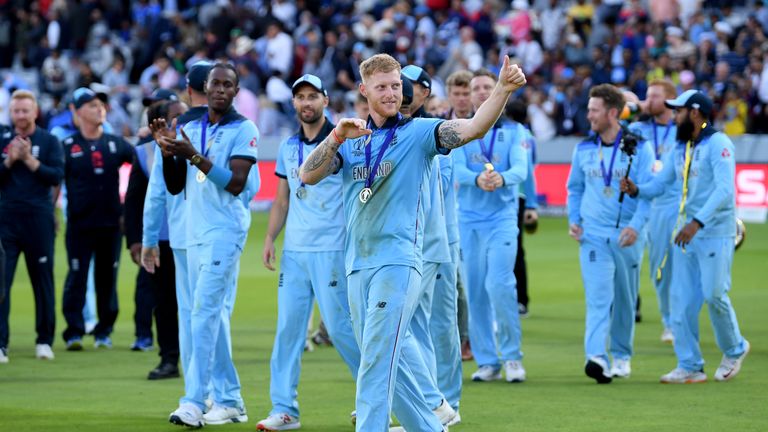
There is pressure in any given cricket game, but there are instances, which totally alter the flow of the match. The events of nervous nineties, last over, super overs, knock out games and finals are the ones where legends are made or careers ruined.
The world cup final super over between New Zealand and England in 2019 was not only a battle between the two countries. It was a mental and physical ordeal. Ben Stokes was very level-headed and embraced pressure rather than ducking under the carpet.
In this case, as well, the last ball six of MS Dhoni in the 2011 World Cup final has become a symbol. He had the whole nation looking on him, and yet his countenance was serene and composed. This shows that the player who remains calm despite the pressure normally wins.
Players are characterized by pressure moments, and they remain always in the minds of fans.
Why Decision making is more important than Skill:
On the international level, practically all players are competent. There are perfect cover drives, killer yorkers, and fielding by athletes. Pressure to decision making is what really counts when it comes to matching.
The decision to use the right shot, change bowling, field set or to take a review is just made within some few seconds. A single misjudgment can destroy a game or even a championship.
Brendon McCullum and Eoin Morgan captains transformed the culture of a team by making fearless decisions. They influenced players to avoid fear of failure but fear of hesitation. Competence is great, decision making even greater.
Team Chemistry and its role in winning:

Team chemistry is a blue-eyed phenomenon that transforms the skilled people into an unstoppable team. History of cricket demonstrates that it is not sufficient to possess star players. As long as there is trust, a connection, and a good dressing room atmosphere, that matters. Players who have trust amongst one another do better when the pressure is on them.
Team chemistry refers to role clarity also. Each player is aware of what is expected of him and on the significance of the team. With determination of roles, ego clashes are minimized and the performance is enhanced. That is why the winning teams are more concerned with the team achievement than the individual performance.
A typical example is the Australian team of the early 2000s. There was a family of players under the leadership of Steve Waugh. The strength of each player was of the same direction. They complemented each other and argued against one another and this aspect had made them strong even in hard situations.
The Indian team which was the winner of the 2011 world cup also displayed good chemistry. MS Dhoni made the ideal balance between the senior and young players. There was equal respect given to legends and newcomers. The emotional attachment in the group was evident.
Finally the chemistry of a team does not only win trophies but also provides players with confidence and long career. Teams that are great beat great individuals.
Minor Embellishments that cost huge games:

Cricket is a game that is unforgiving. One wrong move could lose several years of hard labour. A misfield, wrong decision, dropped catch or hesitation can alter history. That is the reason why cricket is referred to as a game of small margins.
South Africa and Australia 1999 World Cup semifinal is a bitter experience. A simple misunderstanding caused a run out and South Africa dream was over. It was not only a run out, but also a communication breakdown resulting in pressure.
This kind of mistakes usually leads to a ripple effect. The confidence is lost, negativity is introduced into the dressing room, and the tide is turned to the other side. It becomes difficult to recover since the pressure is already high.
Big matches are usually determined by small issues such as no balls, over throws and bad choice of shots. This is why great teams are so much centered on basics.
The Leadership What the Captain Does off camera:

Captaincy does not just consist of winning the toss or making the field. The real leadership occurs within the dressing room. It entails maintaining mental strength in players, knowledge of their own weaknesses, and confidence to players in difficult times.
Other leadership styles were the toughness of Steve Waugh, the levelheadedness of MS Dhoni and the aggression of Ricky Ponting but each were meant to ensure that teams became mentally strong. A lot of the work that a captain does is off camera.
In Great captains, there is awareness on player psychology. They are aware of when to be pushy and when to be helpful. This off field leadership has the potential to either win or lose.
Fielding Efforts the Scoreboard Disregards:

Fielding has proved to be a match winning factor in present day cricket. Catches and run outs are recorded on the scoreboard, and many of the fielding achievements are never recorded in figures.
Momentum can be altered by an opportune jump to save a line or an accurate pass to stop a second run. Such attempts strain batsmen and make them commit errors.
Supporting, in circle fielding, and being on the spot are indicators of disciplined teams. Good fielding instills confidence to traders and generates wickets.
When a team manages to save one run a match, that may be fifty runs saved in a match. It is that difference which frequently determines the outcome.
Jonty Rhodes, Ravindra Jadeja, Ben Stokes, and Glenn Maxwell have proved that by fielding alone, one can win matches.
Team morale is also enhanced by Fielding. The whole team is brought to life through one great effort. Effective teams have fielding as part of their culture.
Momentum: Invisible Force in Cricket:
One of the strongest and least comprehended aspects of cricket is momentum. A single wicket, single boundary or even single vigorous fieldwork can sometimes turn the tide of the game entirely. The change in momentum causes an increase in confidence of one team and a decrease in mistakes committed by the other team.
The score board cannot measure momentum, but it can be felt by all the players on the field. Bowlers come in with increased vigour, fielders are quicker and the batsmen play freely. Doubt and hesitation slip into the game of the opposition on the other side. Intelligent teams understand how to retain momentum when they have it and how to break it when they do not.
Important contributors to momentum control are great captains and seasoned players. The change in bowling which was calm, or at the appropriate time, can bring the momentum of the opposition to a halt. Teams which have mastered this invisible force tend to win the matches than those who have not.
What Cricket Can Teach You off the Field:
Cricket is a lesson about some of the best teachings in life. Resilience is one of the largest lessons. Players do not succeed on the first attempt, and in cricket, players learn to get on their feet once they are disappointed. Each defeat is training to the next event.
Another lesson that is learned in the game is patience and discipline. Long games and long innings demonstrate that not everything is quick to succeed. In some cases, it is more relevant to wait, have faith in the process, and remain focused than to be in a hurry to accomplish something. The lesson is also applicable in real life.
Team work, humility and emotional control are also taught by cricket. Success cannot be achieved by an individual regardless of the talent of the player but by collective effort. Training to be under pressure, respecting others, staying calm in hard situations is what makes the game of cricket not only a sports activity, but also a lesson of life.
References
For unique cricket insights, read this cricket article on unusual scorecards.
This source explains how scorecards often fail to show the complete story of a match.
Conclusion:
Cricket is much more than results, wickets and runs. Who wins and who loses may be displayed in the scoreboard, but it never tells the whole story. The true game is actually about the power of mind, the times of pressure, the choices made by the leaders, the team unity, the fielding plays which are unnoticeable and the power of moving. These factors define matches in a manner that cannot be done through numbers.
The only thing that is special about cricket is that it has a lot of resemblance to real life. The game just like life is challenging in patience, strength and control of emotions. A single decision can alter the course of things, and a wrong move can be a lesson in itself. It is success in cricket, and life, that one should remain calm in the moment of pressure, believe in his or her team, and continue to move on even in face of a setback.
The next time you are watching a cricket game, look past the scoreboard. Watch body language, experience the pressure moments, observe the teamwork and know the emotions of each ball. Since cricket is not merely the process that takes place in the field but in the heart as well as in the mind and is always recalled.
Frequently Asked Questions(FAQs):
Why does team chemistry matter in cricket?
As a result of team chemistry, trust and unity is developed and this assists teams to operate better when challenged.
Can talent alone win matches?
No, talent is not always constant unless it is in a team and they have chemistry.
What is the part of a captain in team chemistry?
A captain sets the dressing room atmosphere and develops trust with the players.
What is the way that contemporary teams form a bond?
By use of open communication, team meetings and well-defined roles.
How is chemistry and performance related to each other?
Good chemistry boosts self-confidence and avoids pressure crumplings.


0 Comments