The Mental Game of Cricket
Cricket is not only a game of talent and technique, but a game of the head. Whether it is legendary efforts or pressure situations in the World Cup, mental toughness creates a difference between champions and non-champions.
In this blog, I will discuss the mental preparation of the cricketers, how they deal with the pressure, how they overcome failures, and how they employ focus, visualization, and team dynamics to reach their optimal level of performance.
Read about Sachin Tendulkar, MS Dhoni, Virat Kohli, Steve Smith, and others to get an idea why mental strength is the decisive factor in the game of cricket.
Introduction:
Cricket has much more to do with a bat and ball than with a game. Although it might on the outside be seen as simple, it is indeed a battle of mind. Mental toughness is needed in every single match, every single ball, and every decision. It is only talent that will bring a player a long way but mental strength is what will make him or her a legend. Talent is inbuilt talent which a player has, the talent to drive a ball through the covers straight and perfect or to bowl a yorker fast and correct. But something deeper than that is mental strength. It is the capacity to remain focused and calm at the moment when all things appear to be spiraling out of control. It is what will enable a player to deliver during a time when the crowd is against them, when they become tired after five days of hard work of a Test match or when the team requires twenty runs in the final over. Mental strength is important in some of the most memorable moments in the history of cricket. During the final of the 2007 T20 world cup, between India and Pakistan, Misbah-ul-Haq came very close to guiding Pakistan to triumph. Pakistan appeared to be on the winning side. However, the composure of MS Dhoni and the coolness of the Joginder Sharma in the last over enabled India to win. Such one incident demonstrated that composure in a stressful situation could alter the game. The other ideal situation is the 2019 world cup final between England and New Zealand. The match was a draw forcing the match into a super over. The difference was caused by the mental resilience of such players as Ben Stokes. He was still composed, calm, and not afraid of tremendous pressure and it enabled England to raise the trophy. These games confirm an easy but significant fact: as the abilities of the players are equal, it is the mental power which makes the difference. There is only so much that physical skills will bring a player and it is the mind that will decide the final outcome.The Mind vs Skill:
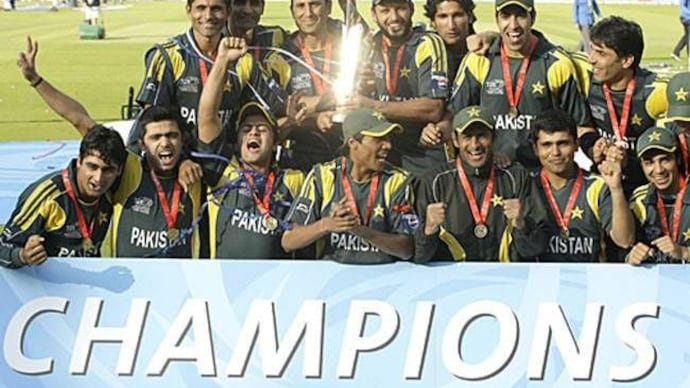
Technical prowess is essential but the game of cricket is played eventually as a game of brains. When there is pressure it is the mind that determines the performance rather than talent. When a batsman pursues a great goal, he may lose concentration, and even perfect style may fail him. When in high pressure situations like when there are only a few number of overs left in a limited-overs match, bowlers can overthink and release wide balls or no-balls when their mental power is low.
History gives numerous instances when mentally toughness prevails over brute talent. One such event is the 1999 world cup semi-final between Australia and South Africa. The game was now a draw and the mental strength that Australia had demonstrated in the whole tournament had propelled them to the final. In the same manner, in the 2005 Ashes series England beat Australia to the first time in eighteen years. Such players as Andrew Flintoff, Kevin Petersen showed tremendous mental strength, which was the difference when physical prowess was insufficient.
These illustrations draw out an important fact and that is, cricket is as much of a mental game as it is an athletic game. Players that are able to stay focused and change with the times and also be able to handle pressure are better than those who use pure talent.
Psychological Preparation before a Match:

The cricketers of the highest rank are aware that preparation is not restricted by physical training; one also needs to be mentally ready.
Elite players tend to have pre-match rituals and routines. An example of this is Sachin Tendulkar who would always pad up in a specific sequence. Virat Kohli has a very rigorous workout program to get his mind right before going out to the field. These routines are meant to make players feel confident, grounded and focused.
Another major method is visualization. Effective players usually visualize themselves playing excellently in different situations of match. In interviews, Kohli has said that he visualizes each circumstance that can ever occur prior to a game, whether it is playing off-the-record shots or bowling the crucial overs during a state of pressure. This rehearsal makes one confident and decreases anxiety in real play.
The role of sports psychologists in the current game of cricket cannot be underestimated as well. Mindfulness, breathing exercises, and positive thinking are worked on by experts such as Paddy Upton who works with players. Studies have shown that in many teams such as India, full-time mental conditioning coaches prepare the players in order to cope with high-pressure situations and remain focused during the matches.
Managing Pressure at the Game:
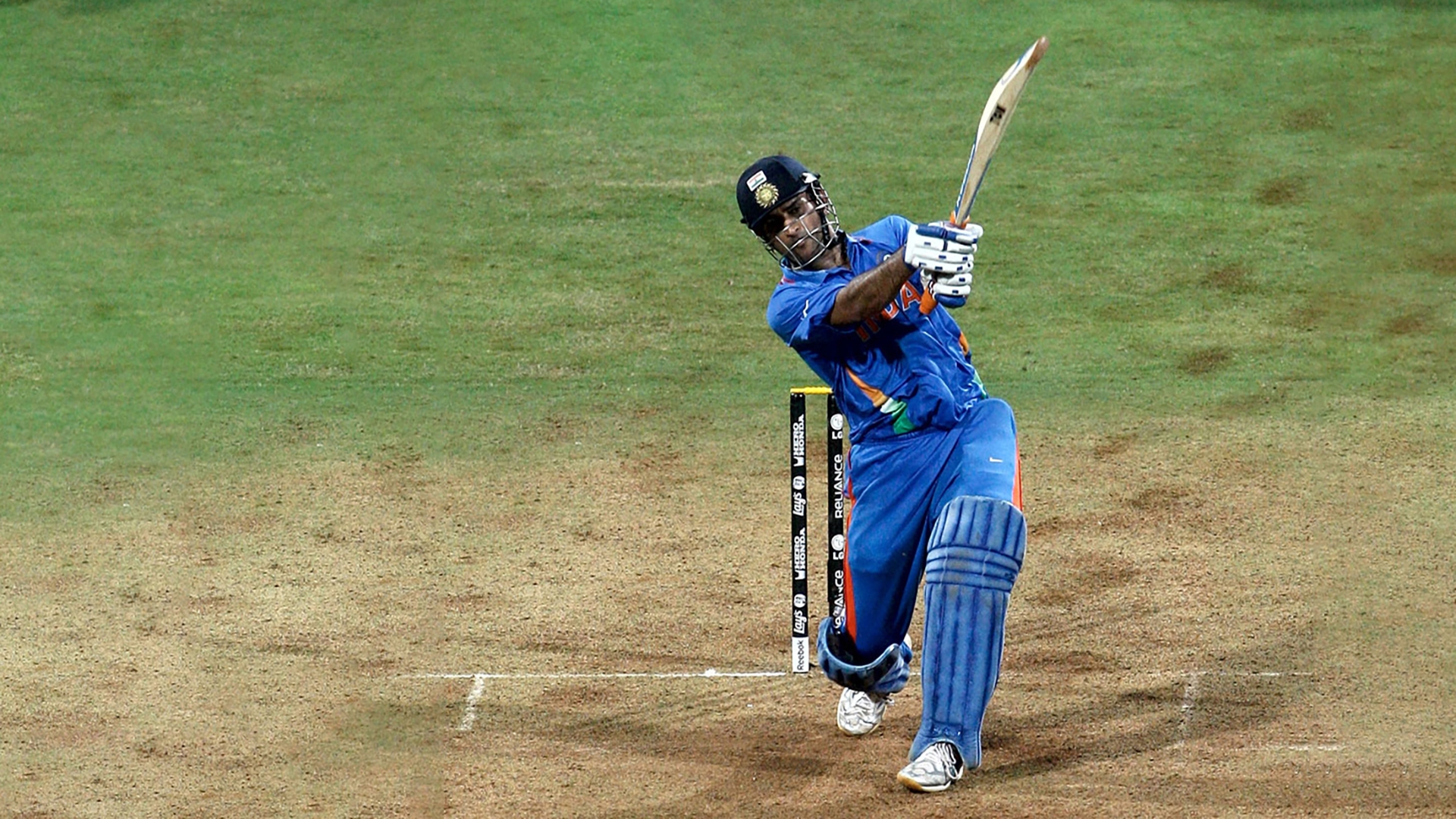
Dealing with pressure in the field is one of the biggest problems in cricket. Test matches require concentration over five days, Orders-in-Days demand concentration over key middle overs and T20 games make each ball a high-value target.
Some of the techniques used by players to handle pressure include taking deep breaths, concentrating on the process and not the end result, and being in the present in order to handle it. There are time-honored illustrations of the transformations of mental strength:
In a 2001 Kolkata Test, India vs Australia, India was put behind forcing them to face the second time.Rahul Dravid created a legendary pairing and made out of the impossible scenario a historic triumph.

Cricket is a game of ups and downs. Losses will come and mental aptitude of being able to bounce back to success is the difference between good players and champions.
The ability to learn out of a mistake is one of the fundamental parts of mental strength. In the case of Virat Kohli, he had a poor tour of England in 2014. He was early to warm up on several occasions and was criticised. He did not give up but examined his technique and found its shortcomings and practiced until he got better. He made a fantastic comeback and emerged as one of the greatest chasers in the modern day cricket.
Injuries challenge not only the mind, but the body as well. Yuvraj Singh fought cancer and came back to international cricket to play magnificently. Jasprit Bumrah has had some back injuries but his toughness of mind enabled him to get back to his best very soon. Even one of the best fast bowlers, Glenn McGrath, was able to work at the very top despite personal problems, one of them being the illness of his wife. Ben Stokes has fought his personal and professional disappointments to provide one of the most iconic performances in the World Cup final in 2019.
These tales demonstrate that failure is unavoidable, but it is the strength of the mind that makes a player lag or be stronger. The players are taught to look at failures as stepping stones and not obstacles and it is a necessary lesson that every person who wants to achieve success in life and cricket must learn.
Famous Individuals who are known to be mentally strong:
Various cricketers are not only praised because of their ability but also because of their psychological endurance:
Sachin Tendulkar: Tendulkar had a singular focus and he never went out of focus in times of pressure. His performance in Desert Storm in Sharjah where he made a century under the influence of the sandstorm is an all time legend.
- MS Dhoni: Famous in completing matches calmly, the helicopter shot and his capability to handle pressure were a result of his calm mind. He is so calm even during the 2011 world cup final until he struck the winning six.
- Steve Smith: Smith is known to be a strong guy and he achieved a spectacular recovery after the sandpaper crisis scoring centuries and guiding Australia in the Ashes series.
- Virat Kohli: Kohli is aggressive but tactical and has a tendency of doing well under pressure. He can pursue and gain what he targets, and this is because of his mindset, combined with rigorous exercise regimen and clear-cut mental attitude.
Team Dynamics and Collective Mental Strength:
The psychological ability of an individual in the game of cricket plays a significant role, whereas a group psychology of the whole team usually carries more weight. A team is a chain, a strong chain; the power of every link in the chain impacts the entire chain. The mental low of one player may affect other players in the field. On the other hand, a psychologically sound, cohesive team has the potential of boosting the performance of all the players.
Morale influences performance in a team directly. Team members that trust one another and have a positive attitude, even when things go so wrong, or they have a bad day, do well. As an example, in the 2007 T20 World Cup, the Indian team mainly comprised youngsters who did not have much international exposure. A host of analysts thought that they would fail under pressure. But a fear-free atmosphere was formed by the captain MS Dhoni. Players were confident enough to make mistakes, have fun and have trust on each other. It is this psychological togetherness that brought them to power, and this demonstrates the importance of team dynamics in cricket.
It is a leadership style that contributes so much in developing mental power. The non-emotional and reserved attitude of Dhoni enabled his team to remain unaffected by difficult situations, whereas a controlled aggression of Virat Kohli encouraged his players to do their best. The two styles worked as they showed that various leadership styles can be effective provided that the mental cohesiveness of the team is high.
Recovery after Failures and Setbacks:
The Power of Focus, Concentration and Visualization:
Cricket requires focus and concentration since the game requires a long period of attention. During Test matches, the players can spend hours at the bat or in the field. It can be a matter of winning or losing even in T20 matches and concentration on each ball can be a difference. There is an array of tricks employed by modern cricketers to focus. Meditations and mindfulness enable players to stay calm in pressure situations. Cricketers are trained using apps and structured exercises to be in the present so that they minimize errors that may arise due to distraction or stress. Rahul Dravid whose popular name is The Wall gained a reputation of being very concentrated. The fact that he would play hours at the bat without getting tired made him one of the greatest Test batsmen of all time. Another potent mental tool is that of visualization. Batsmen imagine that they will play a perfect shot, bowlers dream about hitting the stumps, and fielders dream of fast catches. This psychological practising will enable players to play more confident in real matches. Visualization is not merely a skill, it instills composure and preparedness to situations characterized by high levels of pressure. Fielding is also subject to concentration and visualization. Fast responses, decisive judgment and foresight are all a part of mental abilities that were developed through practice and being mentally prepared. Fielding was revolutionized by players (such as Jonty Rhodes) who integrated instinctive athleticism with a cool mental alertness.
The Mental Game in Contemporary Cricket:

The new dimension of psychological aspect of the game has been added by modern cricket and T20 leagues in particular such as IPL and BBL. Each game is like a last game, and the athletes are under severe pressure before the fans, the media and the social networks. Young players usually go through online trolling, criticism, and the need to perform regularly. The psychological game has added dealing with fame, expectation on the part of people, and the all-time attention. Effective players learn how to remain down to earth and not to be distracted by the outside world. Good examples include the calmness of MS Dhoni, controlled aggression of Virat Kohli, and the ability of AB de Villiers to enjoy the challenge.
Advice to Future Cricketers and Fans:
It is not only professionals who need mental strength in cricket. These examples can teach a lot to upcoming players and fans.
The inclusion of focus workouts daily, meditation, and resilience training make young players develop a powerful mind. One should learn to accept failures and learn. Patience, composure and how to cope with pressure are the lessons that cricket imparts, and are important in life in general.
These principles can be used by even fans in the daily life. It becomes less difficult to handle exam stress, job pressure, or personal issues when one also acquires some mental discipline and concentration as the sport of cricket teaches. Cricket is not a game, it is a manual on how to be patient, endure, and be mentally tough.
Conclusion:
Talent is a backbone but mental strength is that which matters at the end of the day as far as the results in the world of cricket is concerned. Individuals that are capable of managing pressure, being able to recover after failures and continually staying focused become champions.
The fact that Dhoni came out of a small town to be a world cup winning captain, Virat Kohli has used aggression as a weapon, or Ben Stokes has made the impossible happen all serve to underline one fact: that a good mind can be used to do the extraordinary.
As a cricketer or a fan, one major thing makes sense and that is to strengthen your mind and your game will just follow. Mental toughness does not only play to the merits in cricket, but is the game-changer.


0 Comments