T20 cricket has evolved far beyond just big hits and star players. Today, success depends on tactical planning, flexibility, mental strength, and fearless execution. Associate nations such as USA, Afghanistan, Netherlands, and Namibia are challenging traditional giants by focusing on preparation, innovation, and psychological resilience.
From aggressive powerplays and strategic batting to flexible team selection, diverse bowling, and precise fielding, every element now demands smart planning and bold decisions. Big teams that stick to old strategies often fall behind, while nimble, tactically aware teams exploit weaknesses and adapt quickly to match situations. Modern T20 is no longer a game of fame or reputation—it rewards courage, adaptability, and strategy. Any team embracing these principles can compete at the highest level and make a mark in international T20 cricket.
Introduction:
T20 cricket is altering radically. Success is not only guaranteed by talent and reputation anymore. In T20, modernity favors strategic discipline, fearlessness, and adaptability of teams.
Workload and inconsistency were also the challenges even to India, the 2024 champion, in 202526. Australia, England and Pakistan did not cope as well. Meanwhile, affiliate countries do not stop taking advantage of loopholes in strategies, flexibility and psychological training.
The new T20 message is self-explanatory: This is the day on which any team can beat any other. Strategic planning, preparation and courageous execution make people successful rather than star power. Large teams that develop will stay in lead; the ones that stand by olden methods will be pushed out of the field.
T20 cricket is no more what it used to be way back in 2003. It was originally aimed at entertaining the masses using big hits and fast scoring but soon turned into a place of excitement and spectacle. In the years 2007 and 2016, the format showed dominance by traditional cricketing power houses like India, Pakistan, Australia, England, and South Africa; they proved to be more experienced, had depth and star power which enabled them to beat smaller teams.
But between 2022 and 2026, the situation has become radically different. The giants are constantly being defeated by their associate nations such as the USA, Namibia, Netherlands, Oman and Afghanistan. The super over that shook the cricketing world was the 2024 T20 World Cup where the USA upset Pakistan. These scandals are not isolated anymore, they symbolize a paradigm change in T20 cricket because it is more about preparation, flexibility, and psychological endurance rather than fame.
Within this paper, we discuss three reasons of this change: the emergence of associate nations, the necessity of smarter adaptation and contemporary powerplay approaches.
Rise of Associate Nations in Modern T20:
|
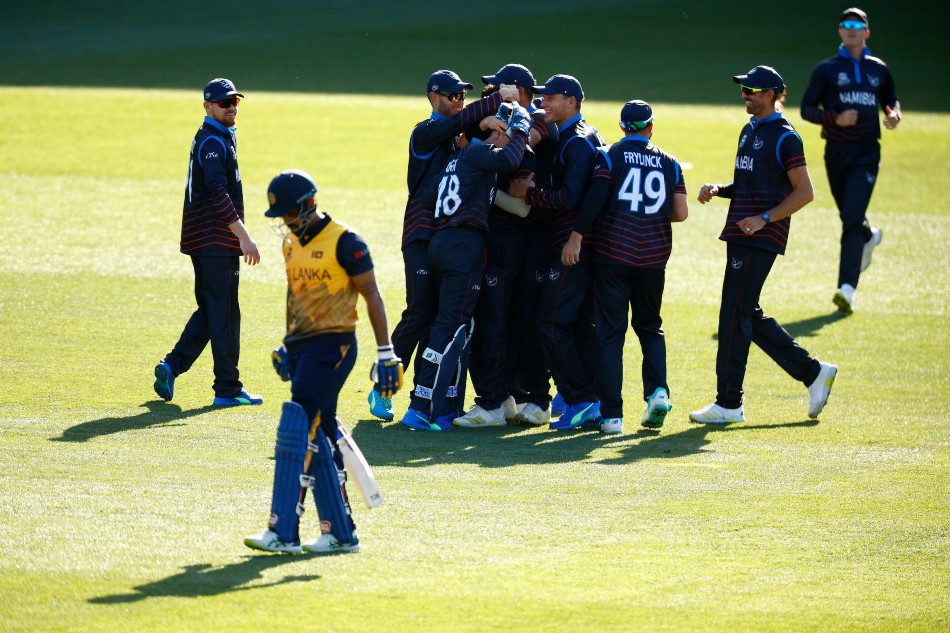
Namibia stun Asian champions Sri Lanka: Previous upset wins in T20 |
The most important trend of modern T20 is the rise of associate nations. Teams that were previously referred to as minnows e.g. USA, Namibia, Netherlands, Oman, Scotland and Nepal have grown to be world players with intimidation of playing fearlessly, planning and being exposed to competing leagues.
One of such cases is a USA vs. Pakistan T20 world cup match. Pakistan, having a good T20 history, went in as favorites, however, USA played a well thought-out game plan. They encouraged in-form players to counter the strike bowlers of Pakistan, used good overs, and calm down in the pressure, and at the end, they won it in a super over (nypost.com, dallasnews.com).
The performance of Namibia in the 2022 T20 world cup was also amazing. They made 46 runs in the initial six overs against Sri Lanka, which came out strong, and their bowling was disciplined and directed to the weaker links of the opposition. Afghanistan on the other hand has shocked giants such as Pakistan, India and Australia with tactical bowling, creative batting and the act of fearlessly executing (Al Jazeera).
Rashid Khan, Gerhard Erasmus, and Jaskaran Malhotra are some of the players who do not only perform individually but also manage teams during moments of pressure strategically. The emergence of associate countries has clarified the fact that the preparation, flexibility and psychological strength have taken the place of historical background in T20 cricket.
T20 Must be made smarter in present times:
The current T20 also has rewarded strategic thinking, situational awareness, as well as adaptability, rather than the ability to hit long. The problem with big teams is that they tend to stick to the traditional approach, or previous experience, instead of dynamic adaptation to the situation and strength of the opponents.
The recent tendencies present that the powerplay totals usually fall between 40 and 55 runs and the death-over scoring of 912 runs per over. The top-order batsmen usually have a strike rate of 120-140, which refutes the legends that strike of 170-plus is normal. Winning is more of clever rotation, timing and shot selection, and less of boundary hitting.
In Scotland vs. Bangladesh 2023, Scotland rotated the strike with skill, formed alliances and capitalized on bowling attack flaws, an example of how experience in the league is equated to tactical intelligence. Likewise, in the same case, in the pursuit of Sri Lanka in 2022, Oman demonstrated controlled aggression a combination of singles, doubles, and calculated risk-taking to sustain the movement.
Flexible batting roles are also reinforced in the modern T20. Such teams as Afghanistan and Netherlands play their power hitters strategically, i.e., they start with caution against certain bowlers and increase speed when the momentum turns. Bowling and fielding flexibility is also essential, and the associate countries will alternate bowlers and arrange irregular fields based on the weaknesses of the opponent.
Simply put, T20 nowadays is a field chess game. The failure of teams to adapt fast or use star players only means that they would be outwitted.
Powerplay Strategy:

|
Top powerplay batting masterclasses in T20I cricket |
This powerplay, or the first six overs, are still one of the most crucial stages of T20. Big teams in the past placed more importance on wicket conservation rather than the early amassing of runs, however, the available current research has indicated that calculated powerplay batting, which is aggressive, can greatly help a team to win.
Powerplay scores that were 40 50 and above provide a good base to the overall scores or chases. In 2022, a powerplay by Namibia scored 46 points against Sri Lanka, which gave the opposing team a back foot start. Equally, the Netherlands vs. South Africa 2023 case exhibited the ability of early aggression to regulate the pace of the game. This principle is a common practice of Afghanistan, which makes such giants like Pakistan and India play the defensive role.
In addition to the condition of running, powerplay aggression causes psychological pressure, which enables smaller teams to take control mentally. Modern T20 also allows more flexibility in batting sequences, where in-form batters can be promoted, and the weak bowlers taken advantage of at the expense of the opposing team something that the big teams, due to their fixed line-ups, are often unable to achieve.
Powerplay aggression, coupled with tactical acumen has come to be a trait of winning teams, and indecisiveness in such vital overs usually costs games.
Batting Innovation 360 Degree Approach:

|
Suryakumar Yadav: The Rise of India's 360-Degree Power-Hitter |
Contemporary T20 requires an all-inclusive and multifaceted batting line-up. Traditional strokeplay cannot dominate matches consisting of straight drives, lofted shots, and textbook shots anymore. The modern day batsmen have to learn to switch-hit, ramp, reverse swing, helicopter shots and other unusual strokes in order to out wit the bowlers on a regular basis. This 360 degree batting style has given a big tactical advantage especially against the adaptive and fearless players who base their tactic rather than reputation.
This can be problematic in the large teams since most of the players have Test or ODI experience where caution and limited risk-taking is valued. Performing well in longer formats, this state of mind may hurt the performance of T20 where one over can turn the tide of a game. Such players as Suryakumar Yadav are the representatives of the modern innovation that combines traditional technique with innovative strokes to make bowlers always under pressure.
This mentality has been adopted by the associate nations. Erasmus Gerhard (Namibia) and Jaskaran Malhotra (USA) quite often shoot unconventional shots with an aim to take advantage of the bowler positions on the field or to assault a particular bowler. These are not random ones; they are calculated plans to ensure maximum scoring and put risks under control.
Flexibility and psychological confidence is essential. Batsmen have to study the field, predict bowler changes and they need to make decisions, whether to attack or be conservative and in a second. The teams who do not learn these skills tend to lose to smaller and brave teams who have no hesitation in taking risks even with the first ball.
Besides, rotation of strikes and pressure partnerships are essential. Even though glamorous, smart singles, who take advantage of loopholes and adequate communication between the partners determine tight matches. The weaknesses of big teams are the tendency to focus on power-hitting and neglect to adapt to the situation.
Insight: Modern T20 batting is skillful, strategical, and mentally liberated. Sporting teams that play on the old-fashioned strokeplay are likely to be outwitted by the smaller nations that are tactical and brave enough to play ball one in the offensive.
Team Selection Wins Matches:
One of the factors that lead to T20 success is flexible team selection. In the past, large teams have tended to be reputation-based, holding onto the star players despite their lack of performance. This played to the advantage of weaker opponents but puts the teams in a tactical disadvantage today. Associate countries are merciless in the management of the squad, they turn players according to form, opposition and playing conditions.
Examples:
- Afghanistan vs. Pakistan (2023): The middle order of Pakistan was choked after the replacement of a wretched spinner with a young and in-form bowler, which led to a victory.
- Netherlands vs. South Africa (2023): South Africa was destabilized by the rotating fast bowlers according to the pitch conditions, whereas predictable strike bowlers were costly.
- As the 2024 T20 World Cup will take place in the USA vs. Pakistan, a change in the batting order during the tournament allowed the USA to take advantage of the weaker overs and secure a super over.
There are modern T20 rewards which are based on loyalty. Players have to be rotated to ensure that the team workload is managed, fitness is not lost and morale is not affected particularly when the tournaments are intense. This is flexible and can react to circumstances dynamically, as opposed to a fixed set of lineups or political interference to start stars.
In short: flexibility in the choice of tactics is no longer a matter of debate. Major teams which continue to carry with them underperforming players run the risk of being outmaneuvered by smaller more adaptive teams ready to take calculated risks.
Bowling Flexibility are Important:
In T20, the use of yorker and the slower-ball has long-since developed. Batsmen are more intelligent, fields are accurate and there is little room of error. Effective bowlers have a vast range of twists: cutters, knuckleballs, slows downs, smokescreens, minor variations to line and length to ensure that batsmen remain clueless.
Large teams tend to fail since they have bowlers who are predictable. The excessive use of conventional strategies permits the fearless opposition to exploit the loopholes and score quickly. Associate countries, in contrast, focus on diversity, strategy and flexibility by combining speeds, rotating bowlers in strategic positions and changing plans depending on the condition of the matches.
Examples:
- England vs. Afghanistan (2023): Afghanistan was taking advantage of expected death-over bowling, which would score legends against England with its world-class attack.
- Australia vs. Netherlands (2024): The rotation of bowlers and the use of slower balls did not allow batsmen of Australia to settle.
- Pace and flight fluctuation by spinners against Sri Lanka (2022): spiraling limited the top order of Sri Lanka although experienced.
Knowledge: T20 bowling today requires diversity, strategy and flexibility. Teams that follow a similar formula stand a chance of being overwhelmed by fluid, creative batting teams.
Data Analytics:
The intelligent and aggressive usage of the data is one of the distinguishing features of the modern T20 cricket. Analytics are available in almost every international team, but big teams can tend to use their data in a conservative manner, using traditional intuition or previous experience. By comparison, smaller teams and T20 franchises work to aggressively use analytics to turn information into tactical advantages.
Today T20 analytics address a variety of fields:
- Match-ups: Knowledge of who each bowler is bothering which of the batsmen and vice versa.
- Field placements: The maximization of positions according to the old shot patterns.
- Bowling strategies: Weaknesses exploitation and finding the tendencies to scoring.
- Situational knowledge: Decision on the most advantageous overs to expedite, rotate strike or to exert pressure.
Real-time analytics help franchises such as Mumbai Indians and Chennai Super Kings to make bowler changes, field adjustments, and even batting schedules. Other associate countries like Afghanistan and Netherlands have followed the same approach in the international arena and they are having an advantage over the traditional power houses who still might not have given up on star players.
Examples:
- Afghanistan vs. Pakistan (2023): Attack Pakistan with data in order to score quickly and build momentum.
- Netherlands vs. South Africa (2023): It has been discovered that the weakness of South African batsmen against short-pitch balls can be analyzed, which makes switching between the bowlers possible.
- USA vs. Pakistan (2024 T20 World Cup): Purchased player-individual information to modify the batting lineup which is key in the super over triumph.
Tactic: In the modern T20 game, as much as it is a game of skills it is more a game of numbers. The teams that do not utilize data in the most aggressive way stand a risk of being outwitted by their competitors, who build analytics into their tactics and psychical training.
Fielding Role in Match:

|
| Poor Fielding |
Fielding had always mattered but in the current T20, it has taken the form of a determining factor. A single slip, misfield or misjudgement of a boundary can make or break the game. The bigger teams due to heavy schedules occasionally exhibit weaknesses in concentration and athletics which are capitalized in by smaller and disciplined teams.
The congestion between fixtures causes fatigue, which affects the catches, ground fielding, and accurateness of throws. Agility, anticipation and situational awareness are usually more successful with associate nations, though with smaller squads and concentrated training.
Examples:
- England vs. Afghanistan (2023): Afghanistan won the match when the catch dropped over a vital over gave Afghanistan an opportunity to speed up and win.
- Australia vs. Netherlands (2024): The addition of death-over misfields 10 additional runs affected the result of the match.
- Namibia vs. Sri Lanka (2022): There was a sharp fielding and catching, which created psychological pressure on Sri Lanka, and it made it commit errors.
Knowledge: Small margins in T20. Superior fielding changes the fortunes of games whereas lapses may cost games even against inferior opposition. Specific training and practice positions associate countries at a strategic advantage.
Stress and Pressure:
Large teams come with massive pressure, both in fans, press and boards and tends to result in conservative decision making. Top-order batsmen are afraid to powerplay, bowlers are not willing to take chances in a crucial over, and captains are adhering to the formula of predictability. Smaller teams, in turn, play with liberty, flexibility, and without fear on their mind, since they have nothing to lose.
Examples:
- India vs. Afghanistan (2023): Caution because of the expectations gave Afghanistan a chance to take advantage of gaps to use aggressive batting.
- Pakistan vs. USA (2024): There was pressure and misfired yorkers were scored in the super over, which allowed the USA to take advantage.
- South Africa vs. Netherlands (2023): The reluctant use of powerplay bat meant that the Netherlands was able to set speed at the first ball.
Smartness: T20 of the modern world is the reward of mental and courageous performance. Those teams which fail to cope with pressure no matter how talented they are are susceptible and the small teams which feel secure about the pressure can work it to their advantage.
Planning and Belief of Small Teams:

|
Afghanistan’s World Cup win over Pakistan |
Planning and belief is the last distinguishing factor. The smaller teams are very well prepared, have roles, set game plans and never doubt their ability. Performing art usually prevails over talent.
Examples:
- Afghanistan vs. Pakistan (2023): Bowler rotations, batting order, and field placements planned out perfectly.
- Namibia vs. Sri Lanka (2022): Powerplay and bowling techniques that are aggressive and are put in action without reservation.
- USA vs. Pakistan (2024): The execution of the super over was perfect owing to psychological preparation and pre-match huddles.
Intelligence: Insight and action and faith are more decisive than star power. Tactical discipline enables smaller teams to counter any gaps in experience or talent and compel big teams to develop.
Conclusion:
Since its launch, T20 cricket has significantly changed. The past cannot just give the fame needed to succeed anymore, nor can the star power. The T20 of today is rewarding of strategic planning, flexibility, fearless action and mental strength. Associate countries such as USA, Afghanistan, Netherlands and Namibia have demonstrated that preparation, tactical intelligence, and flexibility will overthrow traditional cricketing power houses.
From powerplay aggression to creative batting, flexible team choice, multiple bowling, accurate fielding, and information-directed strategies, each facet of the game has now been met with detailed arrangements and boldness. Big teams that cannot respond to these new demands will be left behind by small, more nimble, and tactically-aware teams.
The point is that it is obvious that nowadays T20 cricket is a game of tactics, psychological endurance, and flexibility not only a game of talent. Any team that is ready to accept these principles is capable of making it to the top.


0 Comments